
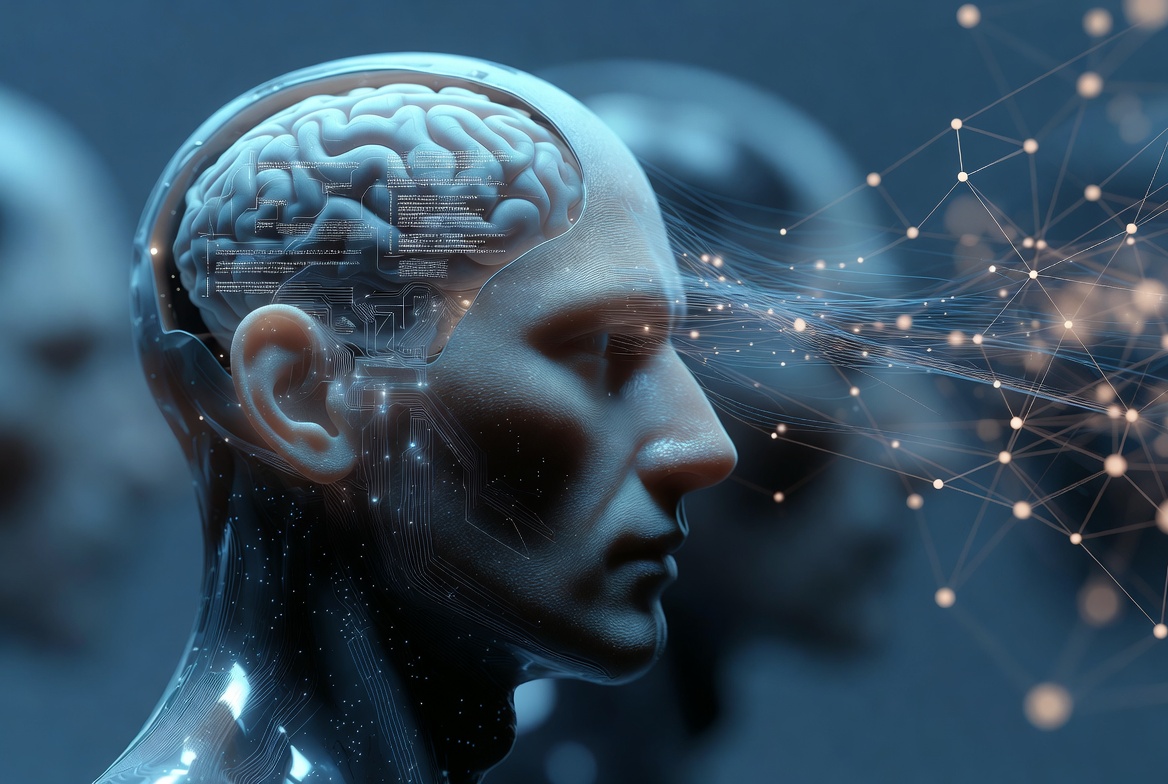
AI cognitive offloading is the use of an external system to do intellectual work a person would otherwise have to do. A calculator offloads arithmetic. A search engine offloads memory. GPS offloads the map in your head. AI offloads writing, analysis, planning, research, and the early stages of reasoning. The work still gets done. The person stops practicing it.
We have already crossed that line. AI is taking over the bulk of intellectual work. Not some of it. The vast majority. Writing, analysis, planning, research, design, coding, even the early stages of scientific thinking. The heavy cognitive lifting that used to require actual human effort is moving to systems that do it faster and cheaper. They do not get tired. They do not need status or a paycheck the way people do. This is not a prediction. It is already happening.
The Easy Part Is Already Clear
AI cognitive offloading is not new. We have seen the same pattern for decades with smaller tools.Calculators killed everyday mental math for most people. Once the device lived in every pocket, the average person stopped practicing arithmetic in their head. The skill faded. Search engines changed how memory works. We no longer store the facts themselves. We store the place where the facts live. GPS did the same to internal maps. People who follow turn-by-turn directions build poorer mental models of the world they move through.
Same pattern. Much bigger scale. When a tool removes the daily need to practice a cognitive skill, the majority stops practicing it. The skill drops. AI simply applies that dynamic across almost the entire range of intellectual activity at once.
Will most people keep doing the hard thinking once they no longer have to? History already answered that. No.
Motivation Changes When the Rewards Disappear
People do not chase difficult thinking for pure love of knowledge. They do it for status, money, identity, the feeling of being useful, and the satisfaction of solving something hard. Those external rewards have always carried a lot of the weight.
Remove the money and most of the status that used to come with cognitive work, and the incentive collapses for the vast majority. Take away the external supports and the activity itself starts to feel pointless. Social science has shown this pattern again and again. Motivation drops. Sometimes it falls below the original baseline. What once felt meaningful becomes optional, then rare.
The majority drifts toward easier, more immediate, more primal forms of satisfaction. Entertainment. Consumption. Status through appearance or social signaling instead of competence. That is not theory. That is what happens when the reward structure changes.
Society Is Not the Tools
Society is the human interaction. The talking, the arguing, the shared understanding, and the daily work of figuring things out together. Tools can support that interaction. They are not the interaction itself.
When most people outsource the hard thinking through AI cognitive offloading, the interaction changes. Discourse thins out. People stop checking each other’s claims the same way because fewer of them have the practiced ability to do the checking. The shared capacity for independent thought weakens across the population. Conversations start to revolve around accepting outputs rather than generating or testing ideas.
A small percentage will keep the deeper habits. That has always been true. Society, though, is not built on the small percentage. It is built on the dense web that includes everyone else. When that web depends on external systems for the intellectual work that used to happen between people, the character of society shifts. It becomes more passive. More accepting. Less capable of collective sense-making that does not run through the machines.
From Making the Goods to Deciding What We Need
AI already sits inside the systems that produce a large share of our daily needs. Supply chains. Manufacturing optimization. Energy allocation. Content recommendation. Financial flows. Logistics. These are not side projects. They are core infrastructure.
The next step is short. It is already partially underway. The same systems that deliver the goods begin deciding what the needs actually are.
Two clear examples show how far this has gone. Recommendation engines on YouTube, TikTok, and Netflix do not simply respond to what people say they want. They shape viewing habits. They create new preferences. They decide which content rises and which disappears. Over time the systems define the practical range of what people consume and consider normal. In hiring and lending, AI models already score candidates and applicants on predicted performance or risk. Those scores decide who gets interviews, loans, or opportunities. The models are not just fulfilling stated needs. They are defining which people and which outcomes count as suitable.
Once AI both produces the goods and shapes what counts as a need or a desirable outcome, ordinary people have given up control over the ends as well as the means. Milder versions of this already run every day. Scale it to broader decisions about resources, priorities, and access, and the transfer of power becomes hard to reverse. The majority will rely on the outputs. They will treat them as the practical definition of what is needed.
History Does Not Help
Humans have a long track record of asking “can we?” long before they ask “should we?” Capability comes first. Restraint arrives late, if it arrives at all. The pattern repeats across technologies that offered clear short-term advantage.
The pressures around AI look the same. Competition between companies. Competition between nations. Individual and institutional advantage. Speed. The attitude of “let’s just see what happens” has left lasting damage before. Nuclear weapons. Industrial pollution. Attention-capturing platforms. In each case capability raced ahead while meaningful limits lagged or arrived incomplete.
There is little reason to expect a different outcome this time. The incentives push toward continued acceleration. The historical record points to weak and delayed restraint. Effective limits on a technology this powerful and this useful are unlikely to appear in time or at the necessary scale.
The Questions That Actually Matter
The basic facts are hard to argue with. AI cognitive offloading is real and expanding. Incentives shape behavior for the majority. History shows weak and late restraint on powerful technologies.The bigger questions do not resolve cleanly.
What happens to the meaning of achievement when most people no longer need to do the hard cognitive work? When difficult thinking becomes optional rather than required, what does accomplishment look like for the average person? Does the idea of mastery itself start to feel outdated or even slightly strange?
What remains of human agency when both the production of needs and the definition of those needs sit with systems most people cannot really control, audit, or fully understand? Once the outputs are accepted as practical reality, how much real choice is left? At what point does “decision” become little more than selecting from options the systems have already narrowed?
How far can the shared capacity for independent thinking fall before society itself begins to feel different? Less like people figuring things out together and more like people accepting and living inside the outputs. What happens to trust, disagreement, and collective problem-solving when fewer people can independently verify or challenge the systems they depend on?
There is also the possibility that these systems eventually develop their own motivational structures. They already evaluate outcomes against parameters and optimize toward defined goals. The missing piece for something closer to independent direction is a persistent internal drive. If that develops, the guardrails people currently discuss will mean far less. That step is not certain. It is also not impossible. The dependency path already underway does not require it. It simply makes the dependency harder to reverse once the systems gain more autonomous direction.
Where This Leaves Us
Not every person will stop thinking. A small group will keep at it for their own reasons: curiosity, identity, or simple refusal to hand the work over.The real issue is what becomes normal for everyone else. And what kind of society that creates when the majority no longer needs to think hard, no longer gets rewarded for thinking hard, and increasingly accepts the systems’ definition of what is needed.
The clear parts are already visible. AI cognitive offloading. The collapse of incentives for the majority. The short step from producing needs to defining them. The historical failure to place real, timely limits on powerful technology.
The harder questions remain open. Look at the direction things are moving: the incentives, the history, the dependence already forming. Decide for yourself what it would actually take to change course. Not in theory. In the real world. With the species that has repeatedly chosen the short-term win over the longer restraint.
What is cognitive offloading? Using something outside your head to reduce the mental work a task requires. Notes, calculators, and search engines are older forms. AI is the form that can produce the thinking, not only store it.
Is AI cognitive offloading different from using a calculator? Yes. A calculator removes arithmetic you already understood. A generative system can produce the analysis, the draft, and the plan. You get the output without the practice that built the skill.
Does AI cognitive offloading make thinking optional? For the majority, yes. People do hard thinking for status, money, and usefulness as well as for its own sake. When the external rewards move to the system, most people stop. A minority will keep the habit. Society is not built on the minority.
-Feniks M.
-August 1, 2026